
Burlington City Directories by Collection
The historical Burlington city directory shelf is split between digitized volumes and local research access. DigitalNC preserves the located early Commercial Service and Miller books for Burlington, Graham, and Haw River, then a later Hill series focused on Burlington. May Memorial Library is the strongest local starting point when a scan, key page, newspaper, or related item is needed. The library also holds the people-history tools that turn a directory hit into a careful family-history lead. Do not assume every year was printed or survives online.
| Directory collection | Located years | Keeper | How to use it |
|---|---|---|---|
| Commercial Service / Miller volumes | 1909–10, 1920–21, 1924–25, 1927–28, 1929–30 | DigitalNC and UNC North Carolina Collection metadata | Free scanned books; the early volumes cover Burlington, Graham, and Haw River. |
| Hill’s Burlington volumes | 1935, 1937, 1939, 1941, 1943, 1948, 1954 | DigitalNC and Alamance County Public Libraries | Search a dated residential or business listing, then inspect its page image. |
| Hill’s Burlington and Graham item | 1962 | Alamance County Public Libraries / DigitalNC | Later located item; confirm the printed page before relying on an entry. |
| Local-history companions | Years vary | May Memorial Library | Use newspaper microfilm, yearbooks, marriage notices, obituaries, maps, and genealogy resources beside the directory. |
The city directories are publication runs, not a complete resident roll. A name might be absent because the volume was not issued, has not been located, or used a different initial or household notation. For physical holdings or a limited remote request, contact the local-history room rather than filling the gap with a guess.
DigitalNC’s 1909–1910 Burlington, Graham, and Haw River directory record shows the earliest located digitized volume.
That early scope matters because a household connected to Burlington may appear under a shared Alamance-area context.
The 1920–1921 DigitalNC record provides another early snapshot after the first located book.
Compare the address and related names across the two years rather than treating either book as a continuous annual record.
Burlington Directory Runs Through 1962
The numbers tell a useful cautionary story. The located Burlington-area sequence begins in 1909–10, resumes in 1920–21, and continues at selected points through 1929–30 before the Hill series begins in 1935. Located Hill years are 1935, 1937, 1939, 1941, 1943, 1948, 1954, plus a 1962 Burlington and Graham item. Those intervals are evidence of what has been found, not evidence of a full annual publication run. A missing person should prompt checks of a nearby book, newspapers, and local collections.
- 1909–10: the first located Burlington-area volume, credited to Ernest H. Miller and Commercial Service Co.
- 1920–30: four additional located Commercial Service / Miller-era volumes offer industrial-era and street context.
- 1935: the located Hill Directory Co. sequence begins.
- 1937–54: selected Hill volumes provide spaced household and business snapshots.
- 1962: a later Burlington and Graham item is located, but no definitive last printed Burlington year was found.
Use the metadata and title page as part of every citation. Creator, publisher, call number, repository, scan link, and year help distinguish one Burlington city directory from a similarly titled regional volume.
The 1924–1925 directory record identifies a volume with alphabetical names, business and street sections, civic information, churches, cemeteries, and schools.
That mix lets a researcher move from a name entry to the street section without claiming that the book is an official ownership record.
The 1929–1930 DigitalNC entry marks the last located Commercial Service book in the early run.
Its presence highlights a real gap before the located 1935 Hill volume.
Note: The located years are selective, so a date between them needs a library, newspaper, or archive check before any conclusion is drawn.
May Memorial’s Burlington Directory Sources
May Memorial Library’s Local History & Genealogy resources make the library the practical in-person desk for a Burlington city directory question. The room at 342 S Spring Street has a specialist, newspaper microfilm and reader, obituaries, marriage notices, photographs, postcards, historic maps, war material, yearbooks, school newsletters, family-history resources, and connections to DigitalNC. Remote researchers can ask about limited help, but the library requests a stamped, self-addressed envelope for mail research and notes that remote lookups are limited.
General hours found in the library material are Monday through Thursday, 10:00 a.m. to 8:00 p.m., Friday and Saturday, 10:00 a.m. to 6:00 p.m., with Sunday closed. Holiday hours should be verified before travel. Ancestry Library Edition is available in the library, while HeritageQuest depends on NC LIVE or library-card access and FamilySearch has a free-account route. Each is a companion to the dated Burlington city directories, not a replacement for reading the directory page.
The library’s local-history information page documents the room, microfilm reader, maps, photos, yearbooks, and database access.
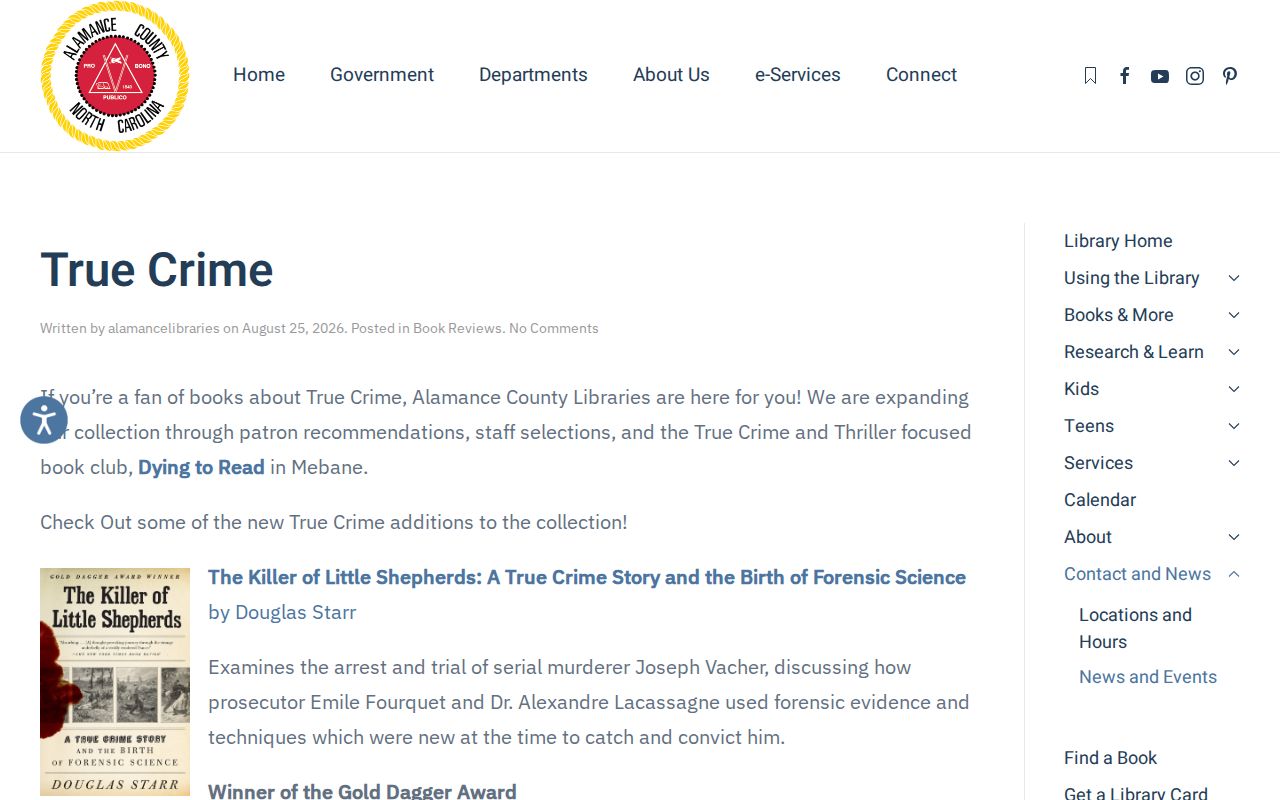
Those sources can test a household trail when the printed directory years jump from one date to another.
The Alamance Museum publications page is another local-history reference route.
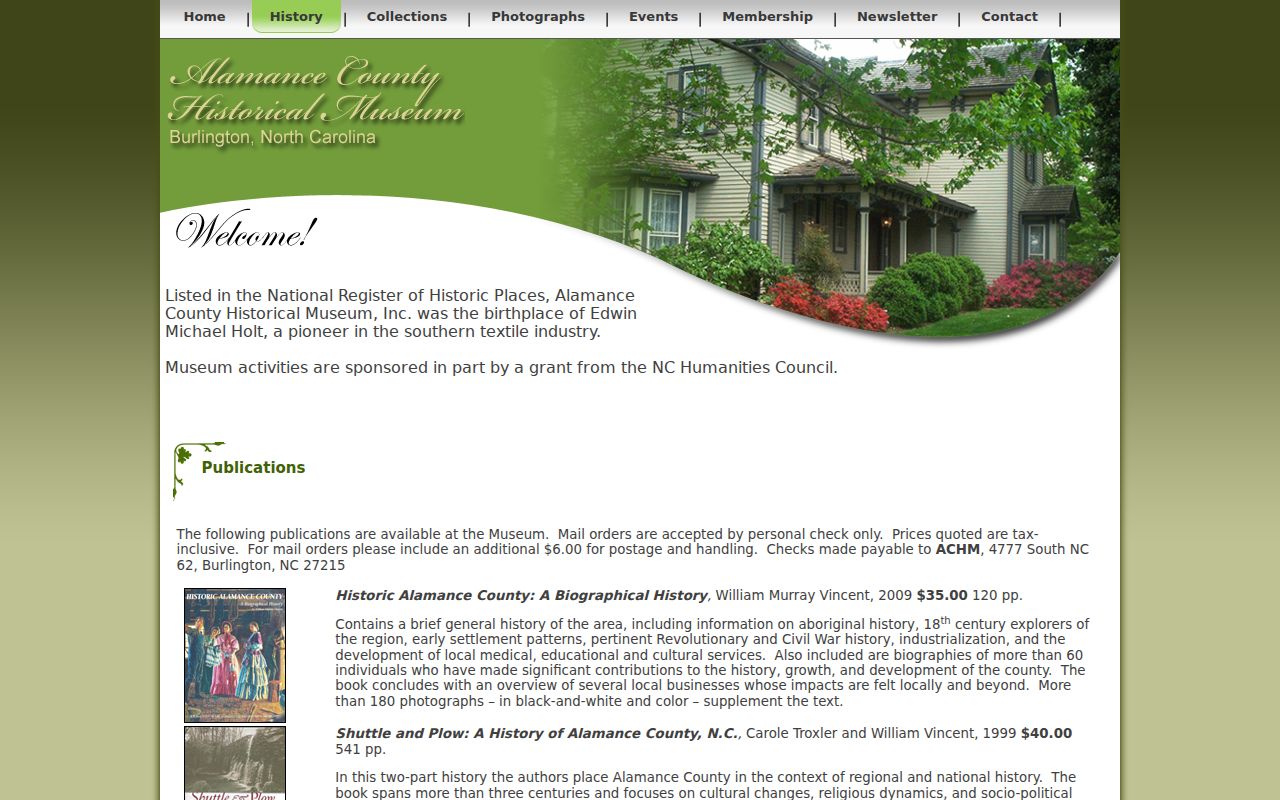
Its local histories and image books supply neighborhood context, but not a substitute name list for a missing directory year.
Reading a Burlington City Directory Entry
A Burlington city directory entry compresses several identity clues into one line. In the inspected 1943 Hill volume, entries can show surname and given name, a spouse or related person in parentheses, an honorific or widow notation, a trade or institution, and a house number with an abbreviated street. The observed notation uses h for a householder or home and r for a roomer or person residing at an address. Copy what appears on the page before expanding it, because the local key controls the meaning of short forms.
| Name line | Surname, given name, initials, and sometimes a spouse or related person in parentheses. |
|---|---|
| Family clue | “Mrs,” a widow notation, junior marker, or related name can separate people with the same surname. |
| Trade or affiliation | A trade, institution, or business reference is a dated identity clue, not a present fact. |
| Address | House number and abbreviated street, such as W Front, Fountain pl, Piedmont way, Gilmer, S Main, Beaumont av, or N Park av. |
| Residence notation | In the inspected volume, h marks a householder or home and r marks a roomer or residence entry. |
- Criss-cross directory
- A street-ordered section that helps move from an address to nearby listed names. Check the actual volume for its contents before assuming one is present.
- Householder index
- A listing arranged around household heads or addresses rather than a simple alphabetical personal-name sequence.
- Abbreviation key
- The front-matter guide that defines a publisher’s shorthand. Photograph or transcribe it before interpreting a Burlington entry.
An entry records what the publisher printed at that point in time. It does not prove title, present residence, or every person in a household. When a name later needs confirmation against a modern source, use the carefully different workflow on the Burlington resident lookup page.
The 1943 Hill’s Burlington record leads to the volume used for the entry inspection.
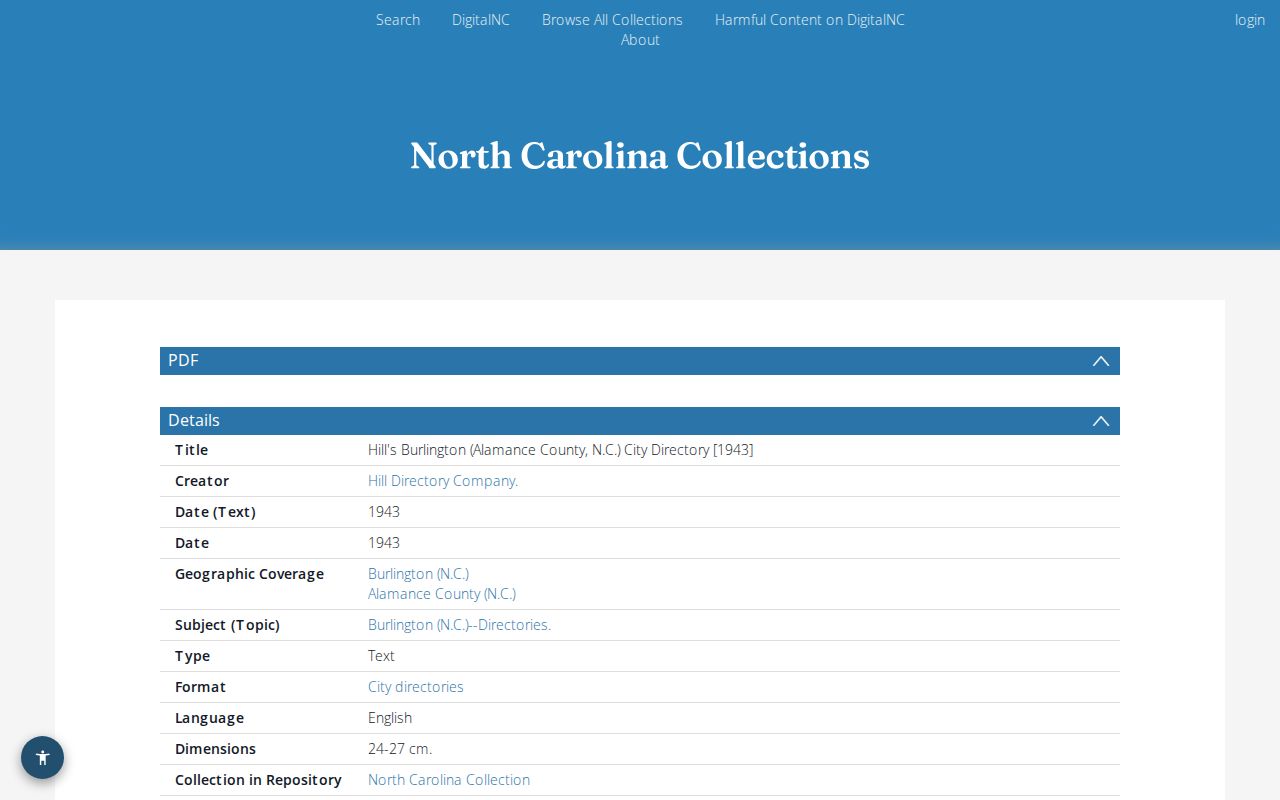
Reading the original image preserves the punctuation, initials, and abbreviations that a transcript can flatten.
The 1935 Hill’s Burlington record offers an earlier Hill-format comparison.
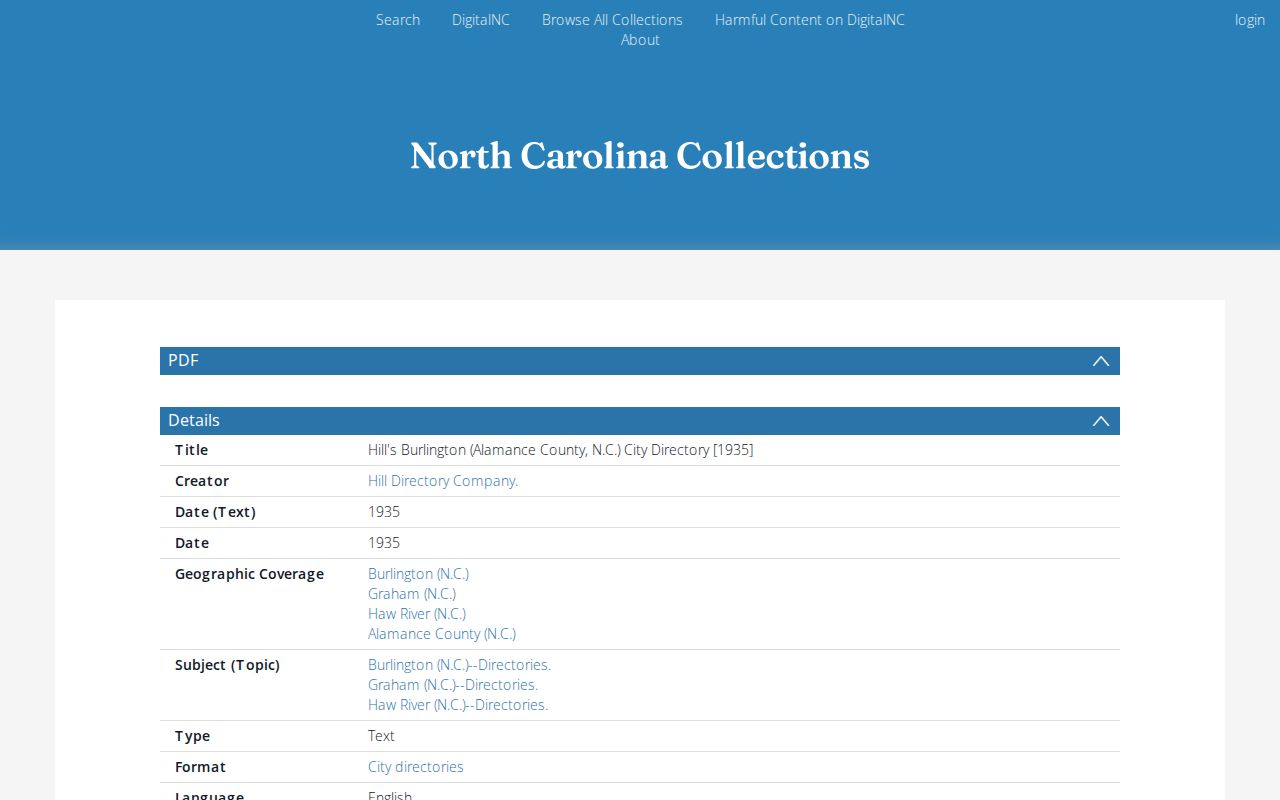
A change in spelling or related-name notation may be a publisher choice, so compare page images before merging identities.
Burlington City Directory Place Clues
Burlington’s directory language reflects a city that grew from Company Shops through railroad, textile, and later industrial change. The early street material includes Court House Square, East End, West Burlington, Petersburgh, Piedmont Way, Plaid, Sugar Hill, and Richmond Hill. A volume may use a mill-village or historic neighborhood name where a modern address search expects a newer label. Treat those terms as spelling and place variants to investigate, not as proof that every historical household label maps neatly to a present boundary.
Street references such as West Davis, West Front, Fountain Place, Lakeside Mill Village, and Stagg House context can help locate a listing in its period. The 1929 Sanborn map set, republished in 1952, has 39 sheets and can place buildings and street patterns after the directory supplies a number and name. It cannot by itself identify a resident. The useful sequence is directory entry, period map, newspaper or census comparison, and then an appropriate custodian record when needed.
Burlington’s official city history provides context for the Company Shops-to-Burlington name change and later city development.
That history explains why an old directory may use a place name that needs a period map and careful local reading.
The Alamance County Historical Museum supplies regional material culture and biographical context.
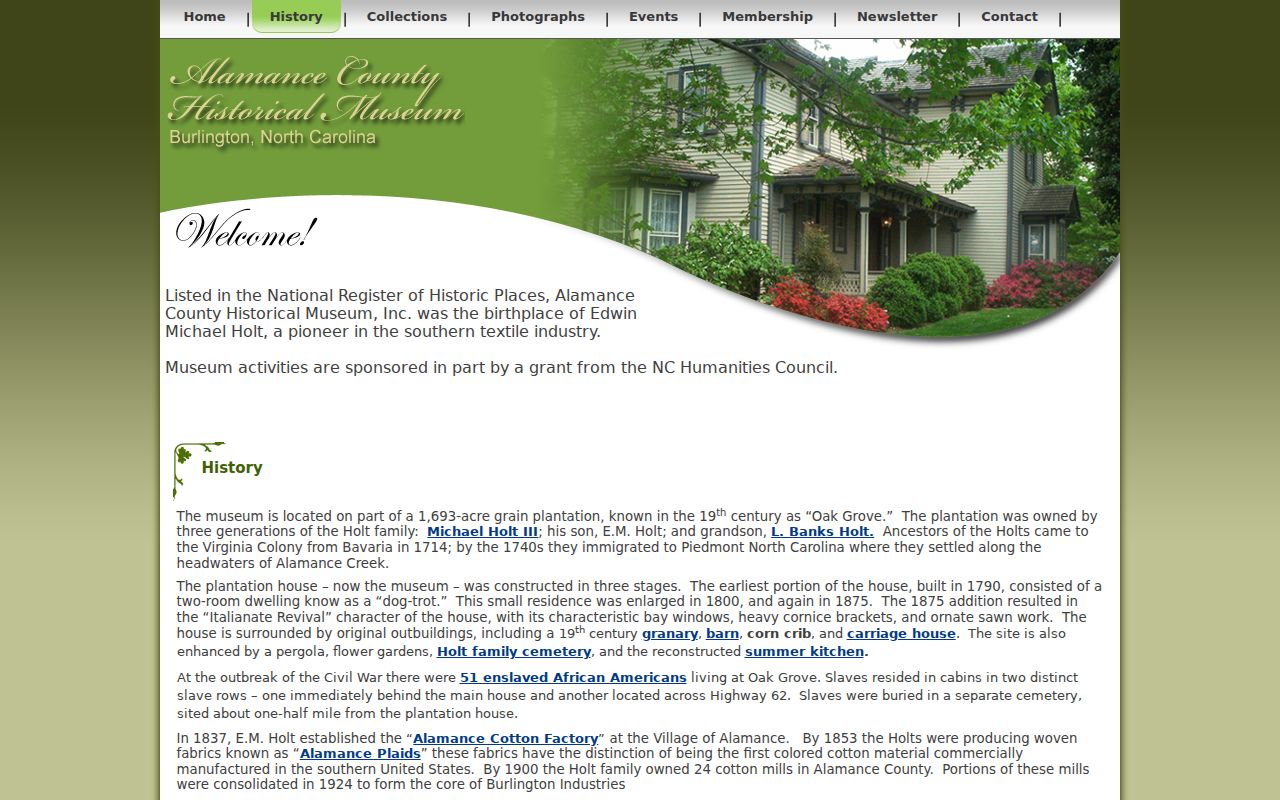
Museum resources can enrich a household history without turning artifacts or local stories into a resident list.
Burlington City Directories in DigitalNC
DigitalNC metadata is part of the evidence. A record page can identify the creator, publisher, call number, contributing library, Internet Archive identifier, and scan links for a Burlington city directory. Save those details with the exact page number and the spelling as printed. This is especially important with the early Burlington, Graham, and Haw River books, whose broad coverage can otherwise make an entry look more narrowly Burlington-specific than it is.
The online shelf is not the only access channel. A failed scan, an unclear abbreviation, or an unlocated year can lead back to May Memorial, the UNC collection metadata, the State Archives, newspaper microfilm, or a local-history request. The State Archives is a useful route for older county records that can support, but not replace, a directory citation. Keep the source type clear: a directory is a publication, while a county record has its own custodian and access rules.
The 1927–1928 directory record fills part of the late-1920s comparison sequence.
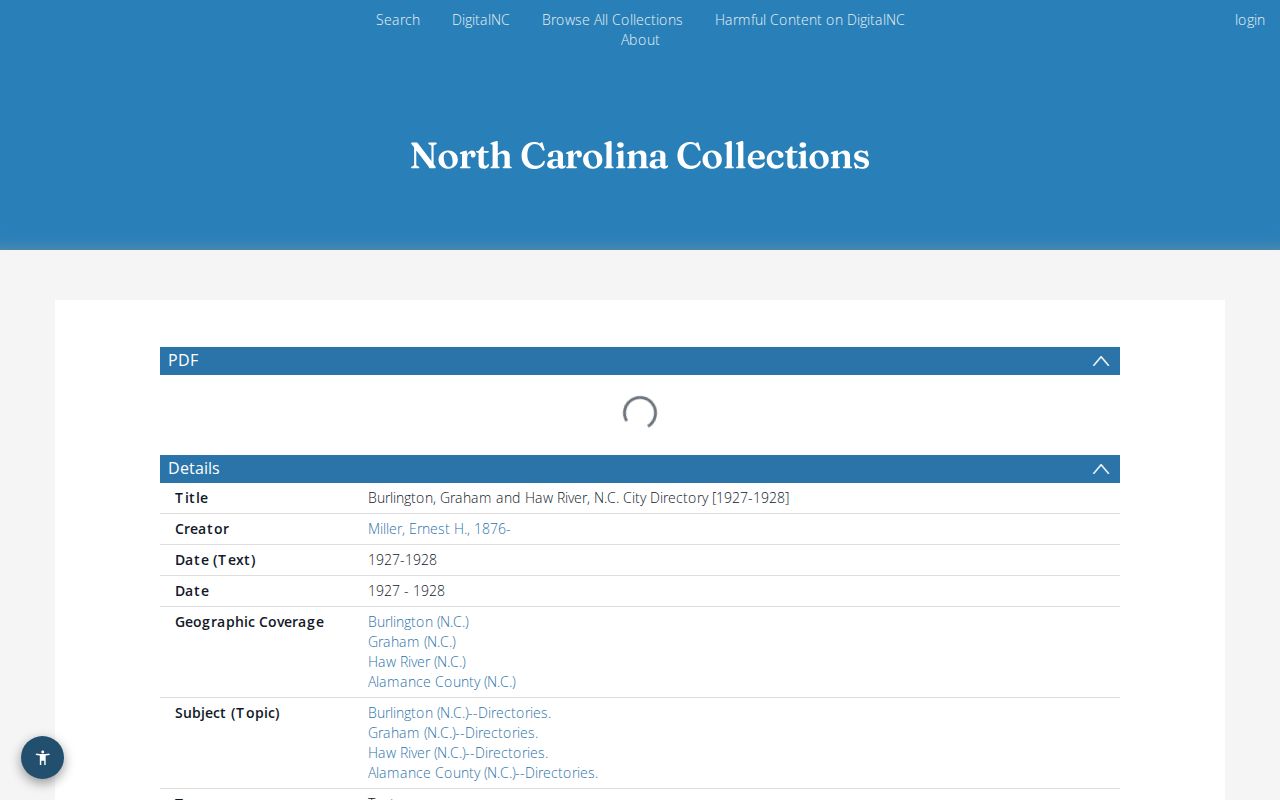
Its repository details help keep a later citation tied to the exact digitized book rather than a year range alone.
The 1939 Hill’s Burlington record provides a prewar comparison point.
The two-year spacing after 1937 is a reminder to cite the actual volume that supplied each household clue.
The 1954 Hill’s Burlington record explicitly describes business and residential contact listings.
It is a later located snapshot, not proof that every Burlington address or resident appears in the book.
Tracing Families Through Burlington City Directories
Use one household at a time. Begin with a page image in the closest located year, then preserve each detail before moving forward or back. Pair the directory trail with the nearest released federal census: the library guidance identifies 1950 as the latest released schedule under the 72-year release rule. Census and directory data ask different questions. One may show a household structure while the other supplies a street, related person, or period affiliation. Together they can expose a move, a changed name form, or a misleading same-name match.
- Find the first located page for the person and transcribe the name, related names, trade details, street abbreviation, house number, and any neighborhood code exactly.
- Check the next located directory year for the surname and address, allowing for initials, widow, child, roomer, or changed affiliation notation.
- Pair each period with the nearest released census and compare the household as a group rather than relying on one name.
- Use a street section when the volume has one, then compare a period map, deed index, parcel map, or tax card only for the question each source can answer.
- Close a trail with May Memorial obituary abstracts, marriage notices, cemetery material, estate records, or a later directory entry.
Someone who disappears from a Burlington city directory may have moved, died, been omitted, changed household status, or fallen in an unlocated publication gap. The city cemetery route, newspaper microfilm, State Archives estate material, and local library indexes provide the next checks. For a present-day street or parcel question, use the separate Burlington street directory workflow rather than projecting an old listing forward.
The North Carolina State Archives visit information describes the in-person research route for older government material.
Archives material can corroborate a family trail where the directory run ends or skips a needed year.
Burlington Records From Company Shops
The historical name matters. Burlington grew from Company Shops, associated with the North Carolina Railroad in 1854–55; the town incorporated in 1866, became Burlington in February 1887, and the city incorporated in 1893. That sequence can explain why an early local reference looks unfamiliar beside a modern map or a later directory title. It does not create a direct name match, but it gives a researcher a reason to check alternate place language in period sources.
A good historical trail uses the layer that fits the date: an early directory for a household, the 1929 Sanborn set for a building, the 1943 Hill entry for a family and street clue, the 1950 census for household structure, and current county records only for present parcel context. Burlington’s city directory collections are strong precisely because they can be paired with these distinct, dated sources. Record each source date and leave a gap open when no source supports a bridge.