
Finding Burlington Resident Trails
Burlington is in Alamance County, while Graham is the county seat. That split matters to a resident search. A Burlington address can lead to the county Tax property record and GIS map, while deeds, court files, and election records have different county or statewide custodians. Begin with a question a record can answer: a current owner, a registered voter, a historical occupant, a court party, or a person named in a recorded document. A tax owner is not automatically the person living at the property, and a deed party is not a household list.
For a current Burlington connection, compare at least two sources and keep their dates. For an older household, begin with a dated directory entry, obituary abstract, newspaper notice, or deed reference instead of assuming today’s address existed in the same form. The Burlington resident records work well together because each has a different limit. One may establish a parcel, another a registration status, and another an older address or relative.
- Search Alamance property data by owner, situs address, or parcel identifier when one is known.
- Use the GIS map to confirm the parcel and jurisdiction before relying on a tax-card result.
- Use the state voter form with a name, status, and Alamance County where a registration question fits.
- Search Cott land records for a deed party, book and page, or legal-description trail.
- Move to May Memorial, DigitalNC, newspapers, or the State Archives for a past Burlington household.
Note: Save the source date with each hit because a current parcel card and an old directory entry answer different questions.
Burlington Resident Records Offices
The main Burlington resident records have several custodians. The Register of Deeds keeps recorded land documents and certain local vital copies. Alamance Tax maintains taxable-property information. The Board of Elections handles registration records, and the Clerk of Superior Court holds court and estate files. The city clerk keeps municipal documents and cemetery deeds. A portal can be useful, but the relevant counter remains the official route for certified copies, older material, and questions an online result cannot settle.
Alamance County Register of Deeds
118 W Harden St
Graham, NC 27253
336-570-6565
Register of Deeds and Cott records route
Alamance County Tax
124 W Elm St
Graham, NC 27253
336-228-1312
Alamance Tax real-property services
Alamance County Board of Elections
1128 S Main St
Graham, NC 27253
336-570-6755
Registration and records information
The Burlington City Clerk is a separate municipal route for city actions, council documents, and cemetery deeds. Request an existing record with a narrow date, subject, street, ordinance number, or meeting reference. Chapter 132 does not require an agency to create a new compilation of Burlington residents.
The City Clerk source shows the municipal records route used beside county records.
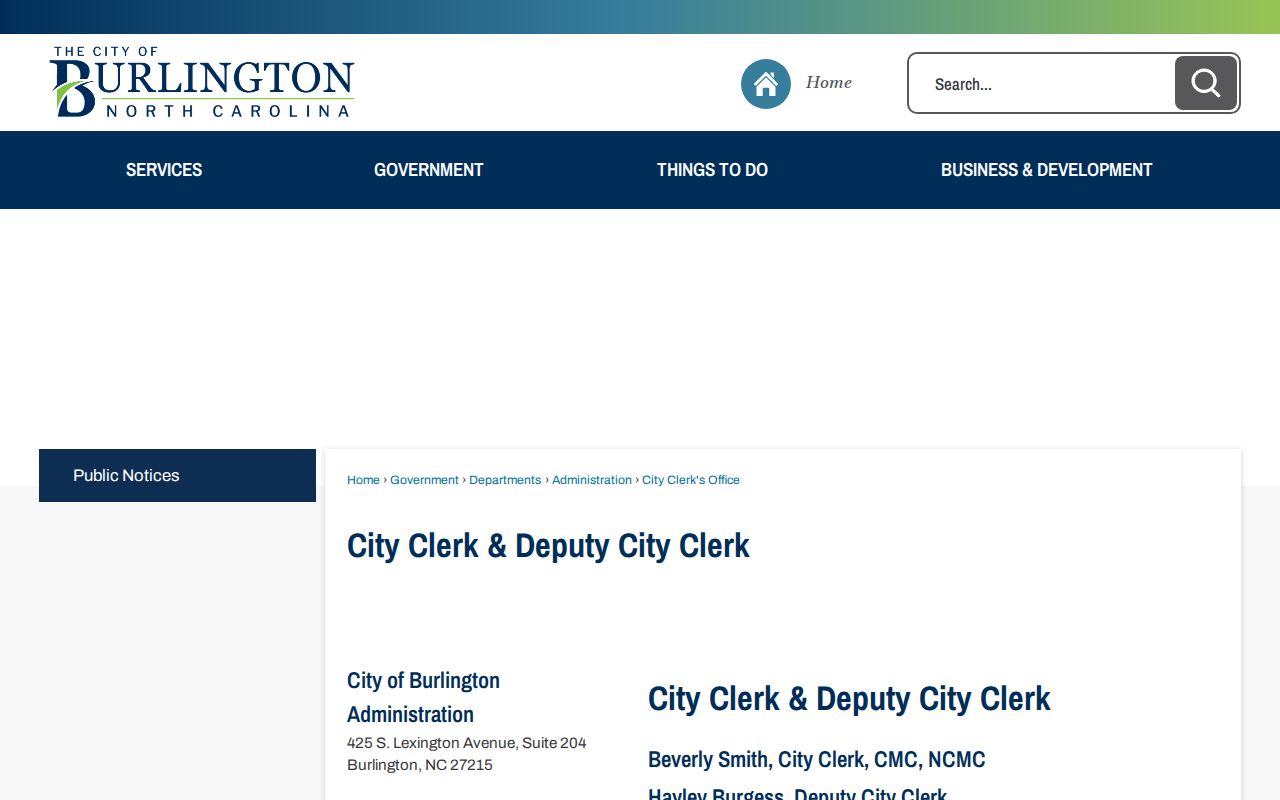
Municipal documents can establish a city action or cemetery-deed trail, but they do not replace county property or court records.
Burlington Property Directory Clues
For an address question, Alamance Tax and the Spatialest property service are Burlington’s current parcel starting point. County materials document owner-name, situs-address, and parcel routes, although the live application did not expose every control during research. Look for the real-property identifier, owner, situs and mailing addresses, legal description, deed book and page, sale vocabulary, and tax district. Treat the mailing address as a delivery address, not proof that the owner lives there. The situs address identifies the taxable parcel.
The property record becomes stronger when paired with GIS. GIS supplies parcel geometry, jurisdiction context, addressing help, and nearby parcel context. It does not settle title or occupancy. Copy the parcel or legal-description detail before opening the recorded-document index, then compare the instrument date with the tax record date. Burlington’s Tax site currently shows a 2026 calculator and a 2027 revaluation notice, so present assessed value should never be described as a historic sale price.
The Spatialest property search is the captured county entry for the Burlington residents directory.
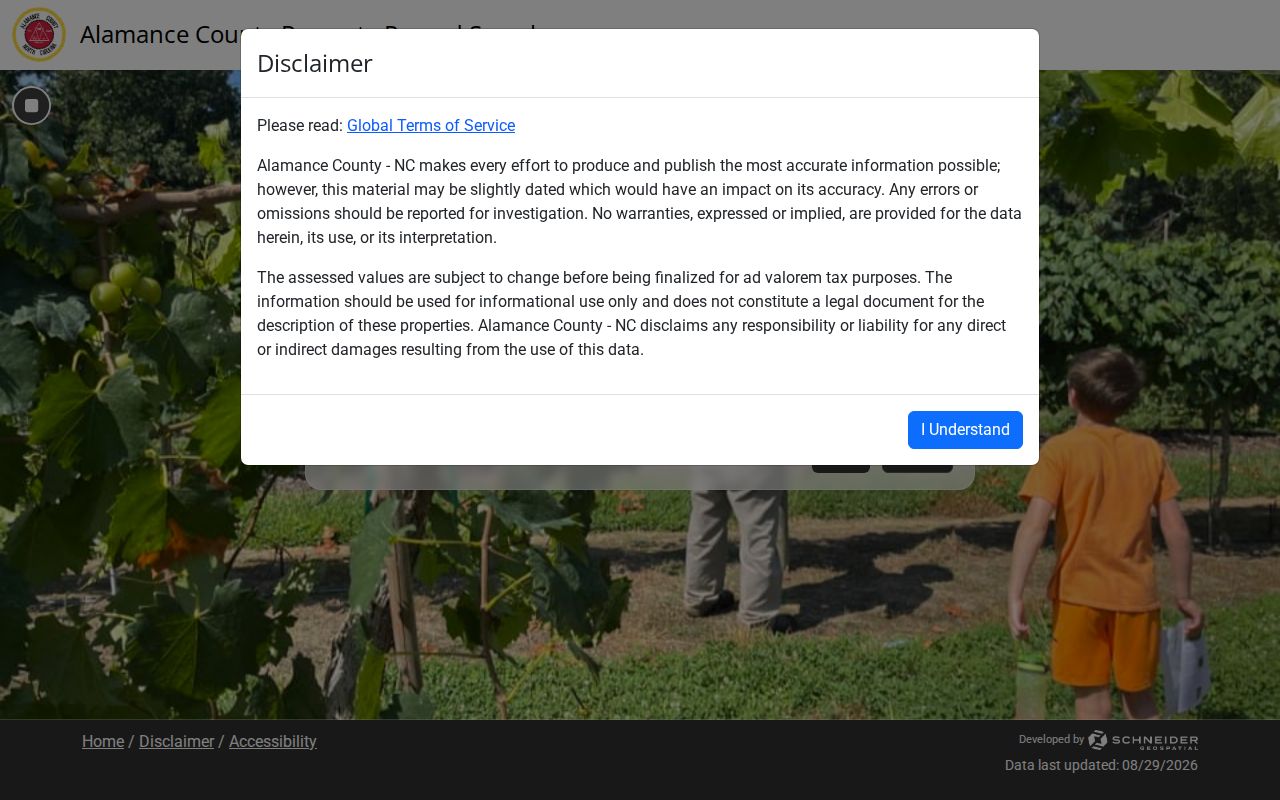
Use a visible property result as a lead, then verify its date, parcel identity, and recorded-document references with the county custodian.
| Property field | How it helps a Burlington search | Important limit |
|---|---|---|
| Situs address | Locates the taxable parcel | Does not identify every occupant |
| Mailing address | Shows where a tax bill is sent | May be outside Burlington |
| Parcel identifier | Bridges Tax, GIS, and record research | Live format should be verified |
| Book and page | Points toward a recorded instrument | Needs comparison with the deed record |
Burlington Voter Record Boundaries
The statewide NC Voter Search is a name-centered registration tool. It requires first and last name plus at least one voter-status choice. A middle initial, year of birth, and county can help narrow a Burlington match. Select Alamance when it fits the known connection. The result is a registration check, not a roster of every person at an address. A non-match may reflect spelling, county selection, status, protection, or an unavailable result.
| Field | Form type | Use for Burlington searches |
|---|---|---|
| First Name | Required text | Enter the given name |
| Middle Initial | Optional text | Helps separate similar names |
| Last Name | Required text | Use the surname and variants |
| Year of Birth | Optional selection | Use when lawfully known |
| County | Optional selection | Choose Alamance for a local narrow |
| Voter Status | Required checkbox | Select Registered, Removed, or Denied |
Released voter data can include name, status, party, released residence and mailing fields, precinct or district, and voter history. Full dates of birth, Social Security numbers, driver-license numbers, ballot choices, and protected actual addresses are not public through the file. Standard data files update weekly, while the county office can explain supervised inspection and existing-record requests.
The NC voter-search form is one part of a Burlington residents directory search.
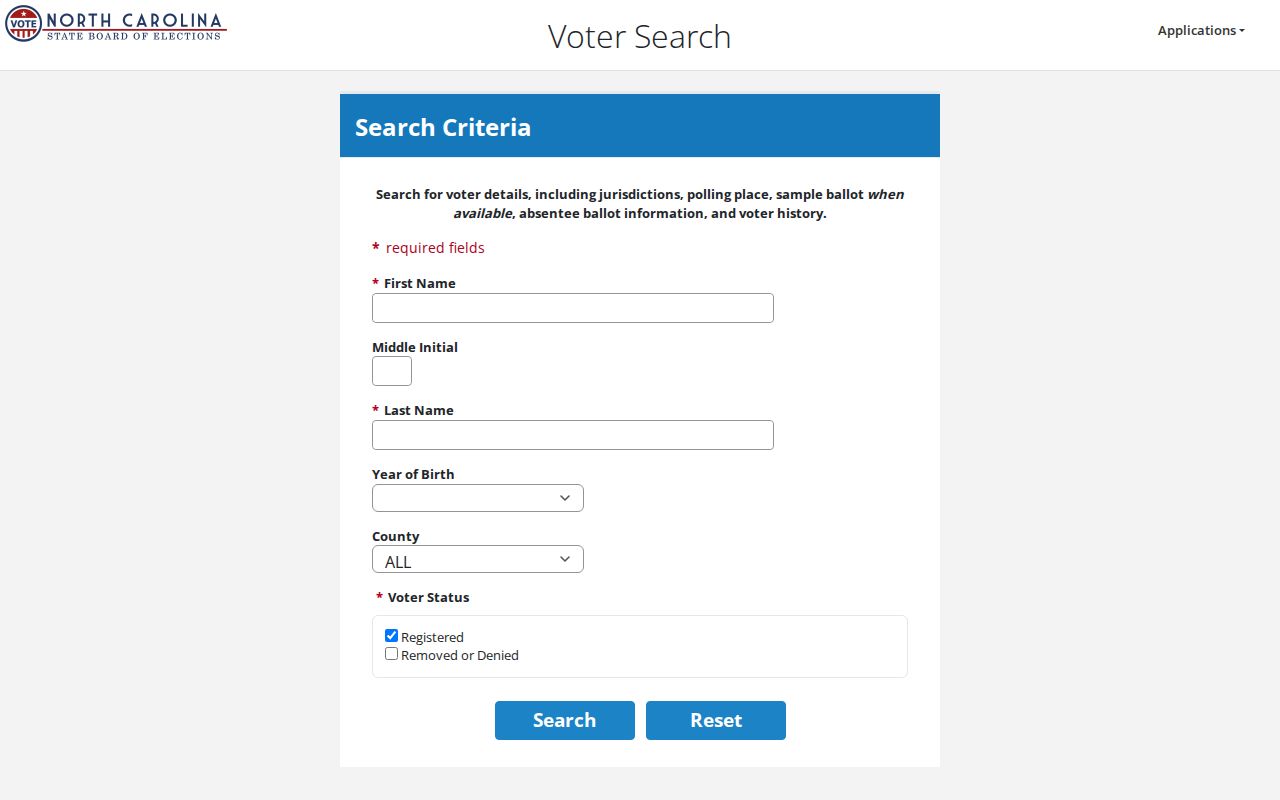
A voter match needs another dated source where the name is common or the address has changed.
Current Burlington Resident Directory Sources
No single current Burlington resident directory covers every person. Each record layer has its own audience and limitation. Property records identify owners, not all people at an address. Voter records describe registration rather than physical presence. Recorded documents identify parties to an instrument. The city staff directory is an office contact source, not a community-wide resident roll. This distinction prevents a plausible-looking search result from becoming an unsupported identity claim.
| Source | Who or what appears | Custodian | Access route |
|---|---|---|---|
| Tax parcel record | Owner, mailing and situs details | Alamance Tax | Online service, counter, and phone |
| Voter search or file | Released registration fields | N.C. State Board of Elections | State form, data page, county office |
| Recorded-document index | Grantors, grantees, and document parties | Register of Deeds | Cott guest search and Graham counter |
| City staff directory | Municipal offices and staff contacts | City of Burlington | Online directory |
| Permit search | Project and applicant details | County or city inspections | Address, owner, permit, or name route |
The Burlington city directory screenshot documents municipal contact listings, not a directory of all Burlington residents.
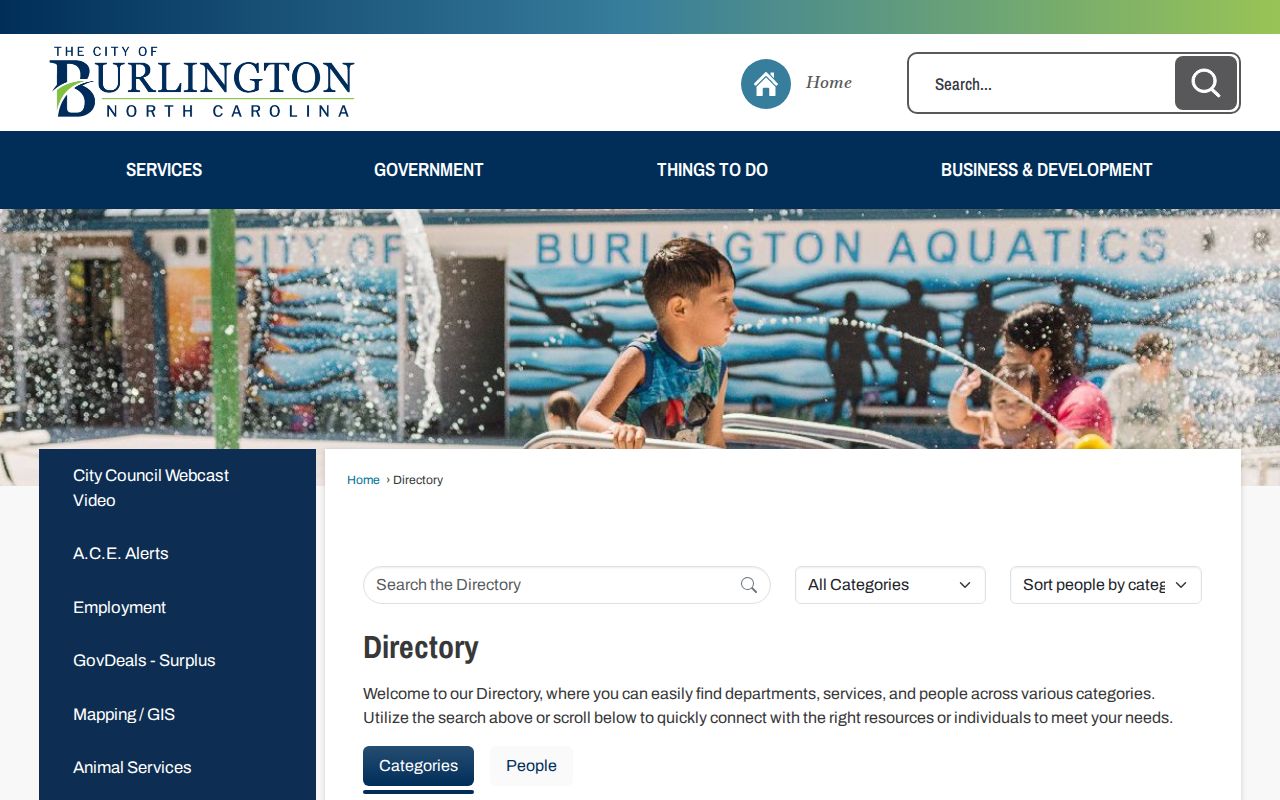
Use the city listing to reach the right department, then ask that custodian for the existing public record that matches the question.
For a street-wide chain, the Burlington street directory follows the address, parcel, permit, and deed sequence in more detail.
Burlington Deed Index Paths
The Register of Deeds’ Cott service is the recorded-document layer for Burlington parcels in Alamance County. Enter as a guest, use Directory search rather than All Matches when the office’s formatting guidance applies, and compare a person name with book and page, document type, recorded date, legal description, or parcel context. The visible sample includes date filed, index, kind, party one, party two, description marked not warranted, file number, book and page, reference, amount, and images.
A deed can connect a person to a recorded transaction and legal description. It cannot establish every person who lived at a site. The office says web records are unofficial and official records are at the Graham counter. Its public instructions do not state a full online index start year. The sample date span beginning in 1980 is evidence only for that sample, not a claim about the archive’s start.
- Grantor
- The party transferring an interest in a recorded document.
- Grantee
- The party receiving the recorded interest.
- Parcel
- A taxable land unit identified in county property and GIS systems.
- Legal description
- The lot, block, subdivision, or boundary description used to identify land in a deed.
The Cott land-record login is the captured county source for Burlington deed research.
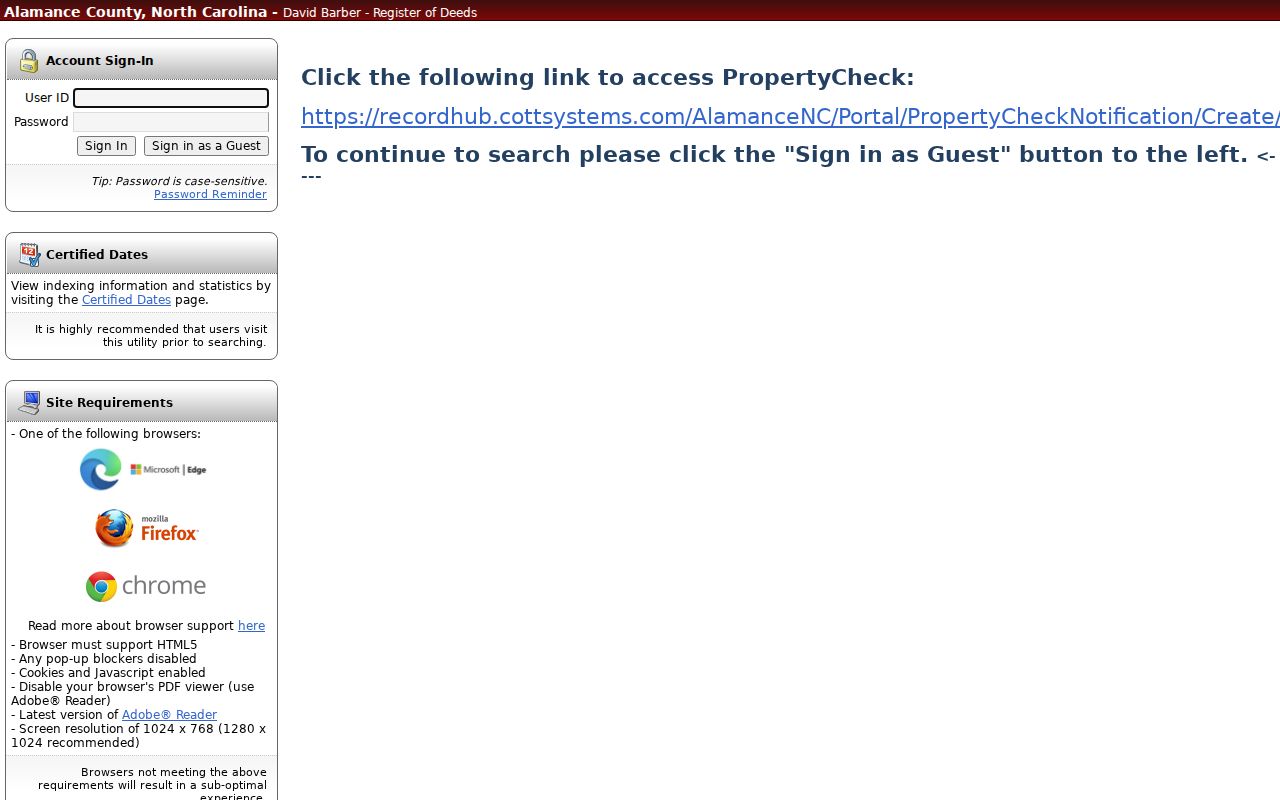
When the online index is incomplete or unavailable, ask the Register of Deeds about older deed books, microfilm, and counter indexes.
Burlington Court Party Records
Burlington court matters are handled through Alamance County Superior and District Courts in Judicial District 17 and the statewide NC eCourts Portal. Search modes include party or name, attorney, case or record number, citation number, hearings, advanced case type, and judgments. A public result can contain a case summary, party information, events, dispositions, hearings, or financial information. Public access has limits. Juvenile, sealed, expunged, protective, adoption, and certain warrant material is withheld or restricted.
The eCourts statewide implementation completed on October 13, 2025. That makes the portal the public starting point, while the Alamance Clerk remains the official-copy and older-file route. A filing address may be historical or protected. Compare full name, middle initial, county, party role, date, related names, and disposition before linking a court result to a Burlington resident.
The North Carolina eCourts Portal screenshot shows the statewide court-search entry used for Burlington record checks.

The portal is a public index and viewing route, not a substitute for a certified Clerk copy.
Burlington Vital Record Custody
Vital records are split by event, date, and document type. The Alamance Register of Deeds can issue local birth, death, and marriage copies within its custody. NC Vital Records handles statewide certificates and divorce certificates, while the Clerk holds the underlying divorce file. State custody begins with births in 1913, deaths in 1930, marriages in 1962, and divorces in 1958. Earlier routes vary among the county office, Clerk, and State Archives.
Certified copies are subject to relationship, identification, legal-interest, and representative rules under N.C. Gen. Stat. § 130A-93. The state’s standard search and copy fee is $24 for a three-year search, and the Alamance local certified-copy route lists $10. A certificate proves an event, not current Burlington residence. Obituary abstracts, cemetery records, directories, and estate material can be better historical leads when eligibility bars a certificate order.
The NC Vital Records order page is the current state ordering source captured for this Burlington residents directory.
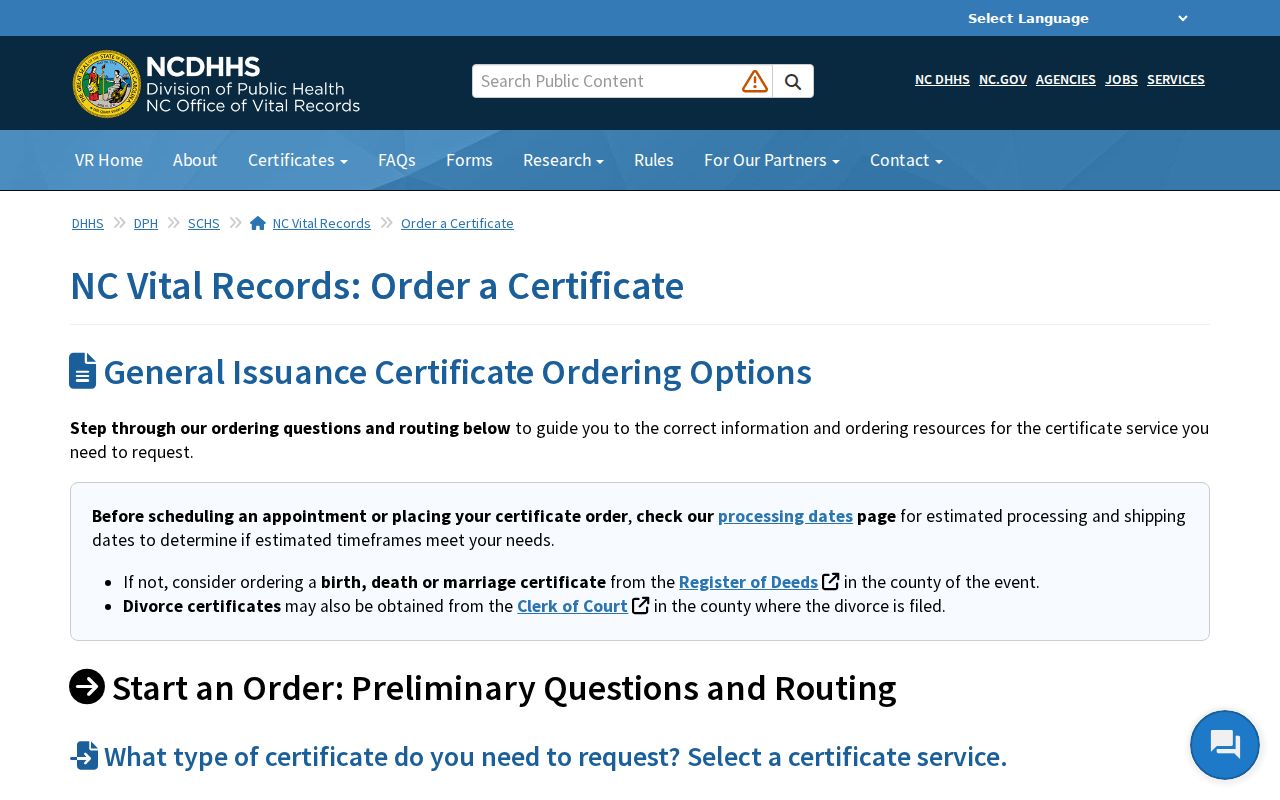
Check the current order page before sending payment because fees, processing dates, and form routing can change.
Historical Burlington Resident Directories
Burlington’s historical directory trail is unusually useful, but it is not continuous. Located Commercial Service and Ernest H. Miller volumes include 1909–10, 1920–21, 1924–25, 1927–28, and 1929–30 for Burlington, Graham, and Haw River. Located Hill Directory volumes include 1935, 1937, 1939, 1941, 1943, 1948, 1954, and 1962. Each volume is a snapshot of its publishing date, not proof of ownership or a current household.
May Memorial Library is the local-history hub. Its room has newspaper microfilm, maps, photographs, yearbooks, obituary and marriage indexes, family Bibles, and genealogy resources. DigitalNC provides scanned directory material, while the library and State Archives provide the in-person fallback when an item, page, or year is missing online. The 1943 Hill format can include a name, related person, occupation, employer, and address, with h used for a householder/home and r for a roomer or residence in the observed sample.
The May Memorial local-history resource is shown below as a Burlington residents directory research stop.
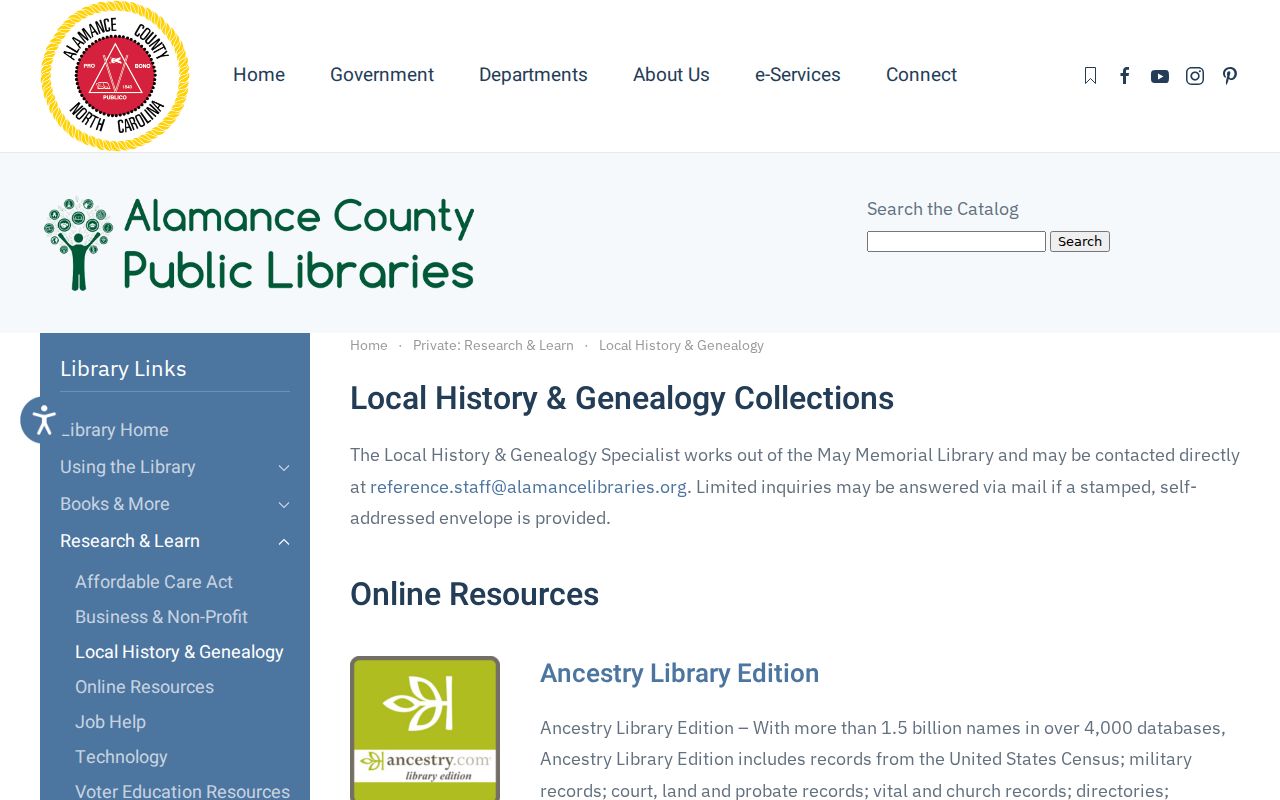
The library ties a printed directory entry to newspaper, map, yearbook, and obituary context without treating any one item as a complete population count.
The fuller historical shelf, publishers, years, and entry-reading method belong on the Burlington city directory page.
Burlington Cemetery Record Routes
Cemetery records can help close a historical Burlington trail when a directory entry, obituary, or estate record identifies a death period. Burlington’s Cemetery Grounds division identifies Pine Hill, Brown’s Chapel, Northlawn, Rest Haven, and the Pine Hill Columbarium. The city links its public burial lookup through Pontem, but the research capture did not expose its field labels, result fields, plot coordinates, or export behavior. Confirm a returned cemetery and section with the cemetery office before treating a name match as an identification.
The Burlington online burial search is the city’s direct lookup route.
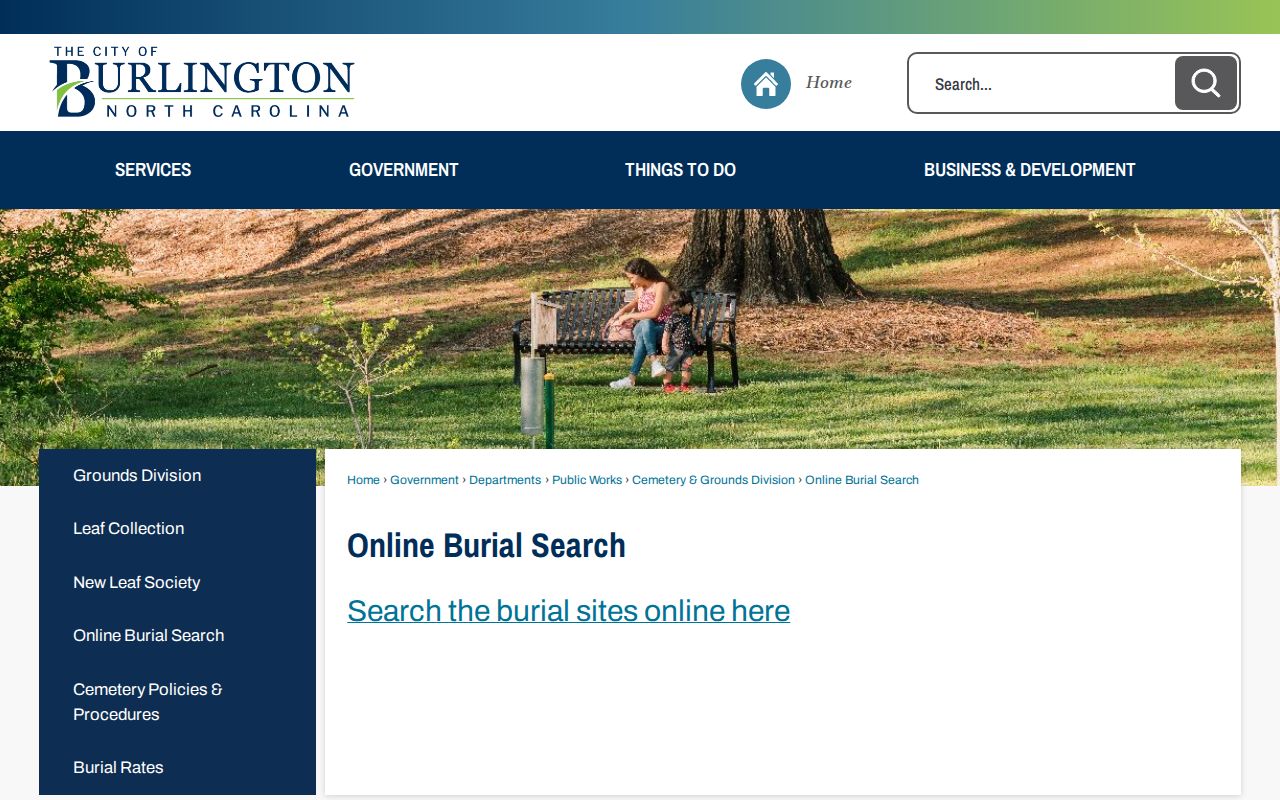
The lookup can support an obituary or directory trail, but it is not a present-residence record.
The Burlington Cemetery Grounds source identifies the city cemetery system behind the public search.
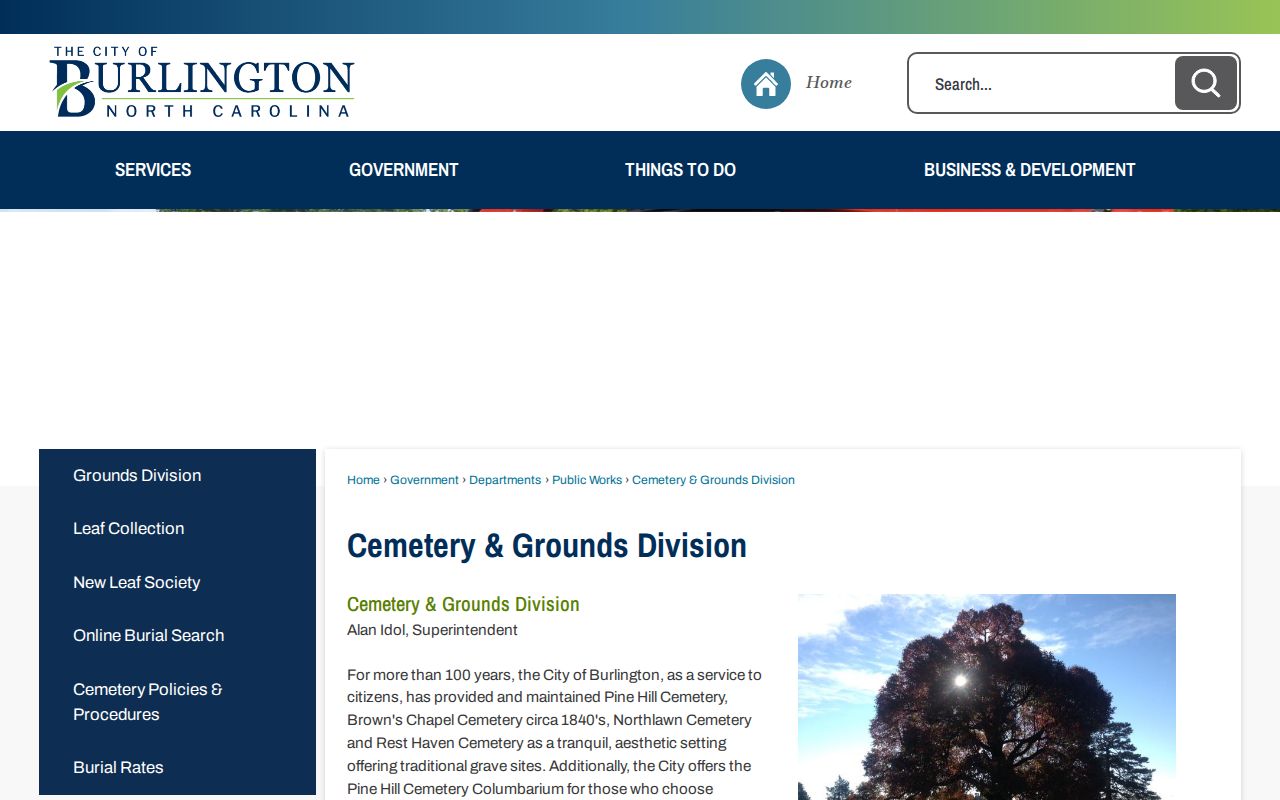
City cemetery staff can clarify local custody and the meaning of an interment result when an online match is incomplete.
Burlington Public Record Privacy
North Carolina’s general rule favors access to existing public records, but each record set has its own limits. A custodian may redact protected material and is not required to create a new compilation. Voter files exclude full date of birth, Social Security numbers, driver-license numbers, ballot choice, and protected actual addresses. Vital records have eligibility rules. Court portals omit restricted categories. DMV information is protected by federal law, and utility or delivery records are not public resident rolls.
The North Carolina Address Confidentiality Program gives qualifying survivors a substitute address that agencies must protect where the law applies. A protected address or a blank result is not an error to work around. Ask the original custodian about a correction, access limit, or request route rather than relying on a copied profile.
Burlington Records After Portal Failure
A web form is only one access channel. The Register of Deeds identifies its counter as the official record source, and its past provider outage showed why a Graham counter, deed books, microfilm, and staff guidance still matter. Courts have kiosk and Clerk routes. The library has a local-history room and remote research limits. The State Archives holds Alamance estates from 1856 through 1949 and miscellaneous county records from 1836 through 1939. When a source is not online, use the office that owns it.
| Need | Online starting point | Fallback channel |
|---|---|---|
| Recorded land document | Cott guest index | Register of Deeds counter, deed books, or microfilm |
| Existing county record | Agency portal when available | Narrow Chapter 132 request, phone, or counter |
| Historical household clue | DigitalNC or library databases | May Memorial or State Archives |
| Court copy | NC eCourts public portal | Alamance Clerk or courthouse kiosk |
The Alamance News report on the Cott outage documents the value of an office fallback for Burlington deed research.
A portal interruption is not evidence that a record is gone. It is a reason to use the custodian’s alternate channel.
The Alamance Sheriff public-records route illustrates the written-request model used by a county custodian.
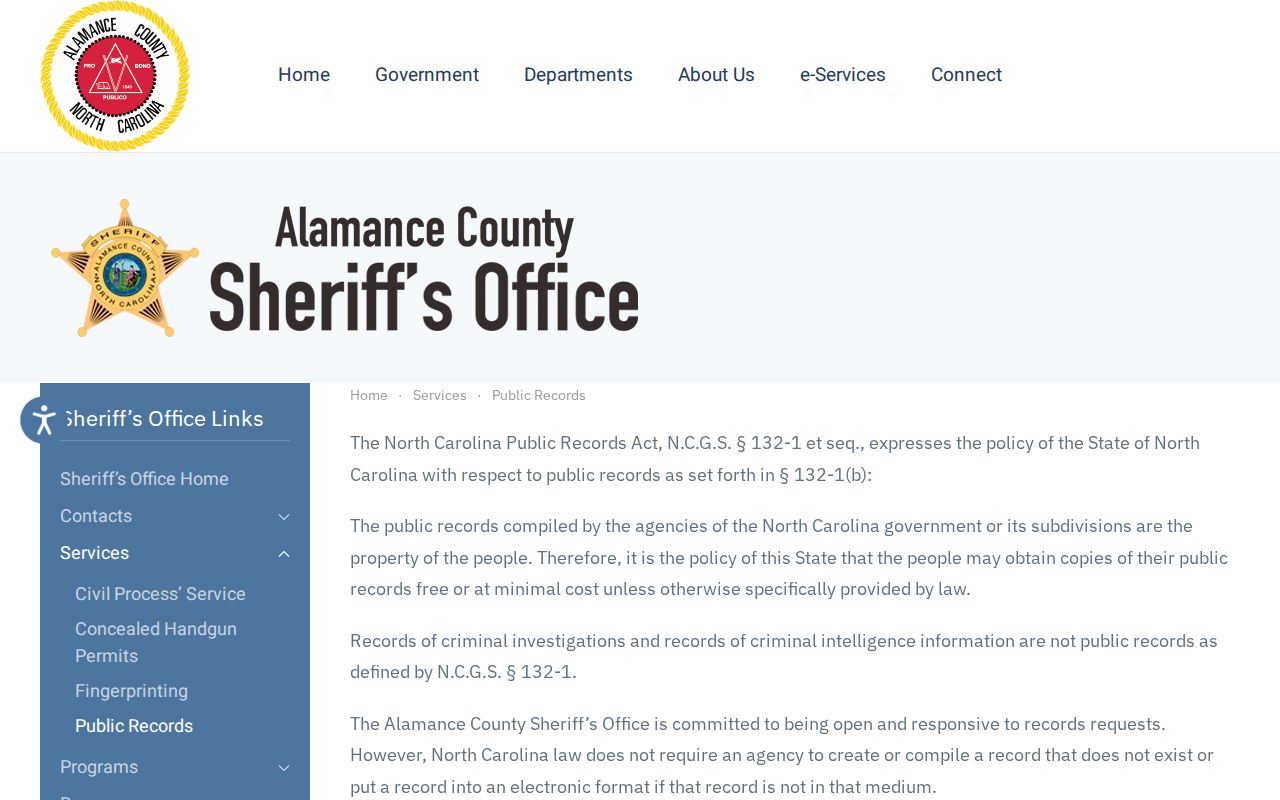
Use a narrow written request for an existing record and expect lawful exclusions or actual costs where the custodian explains them.
Note: A request should identify the record, date range, office, and preferred format without asking staff to build a new directory.
Burlington Records Timeline
Burlington’s record trail changes with the city’s name and record medium. Company Shops grew around the railroad in 1854 and 1855, was incorporated in 1866, became Burlington in February 1887, and was incorporated as a city in 1893. An old directory, deed, map, or newspaper can therefore use a community or street reference that does not match a modern search box. No official complete street-renumbering or old-to-current address crosswalk was located, so preserve old spellings and test them against nearby names, plats, Sanborn sheets, and GIS.
The Burlington GIS Division source shows municipal GIS context used beside the county parcel map.
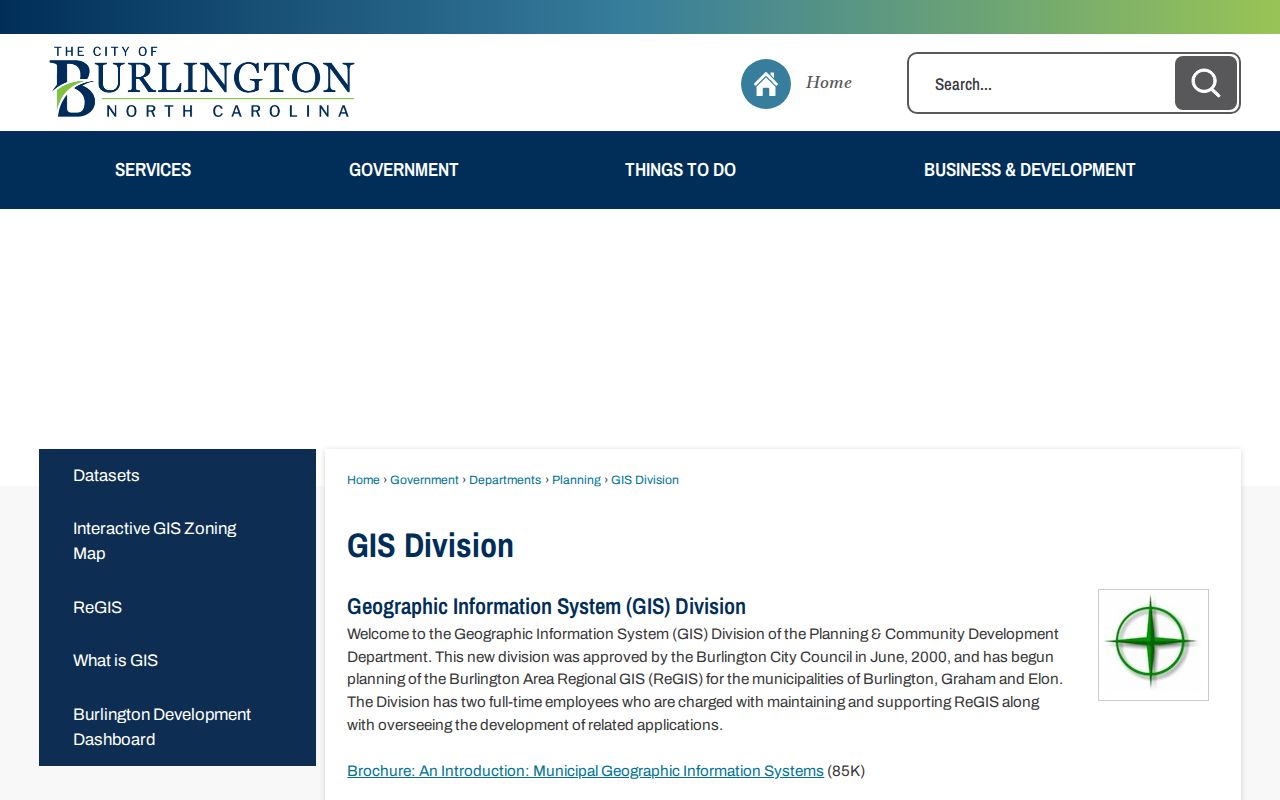
Current GIS can establish present parcel context, while old maps and directories help test how a Burlington address was described in its own period.
The Alamance Museum collections source preserves local material that can add historic context to a Burlington name or place.
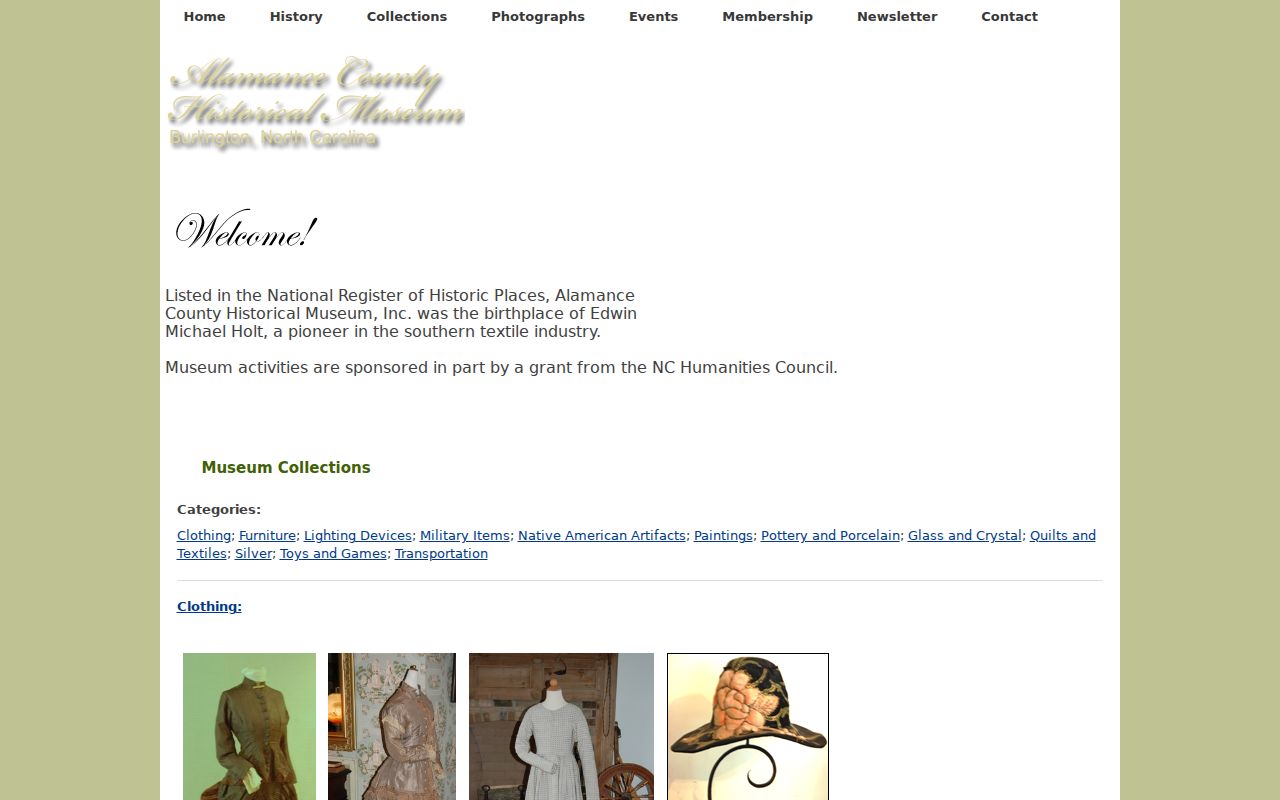
Museum material complements the directory, library, and archive trail, but it is not a current resident list.
Burlington Safety Lookup Limits
Some government lookup tools are narrowly scoped. The Alamance Sheriff inmate list is a changing county detention roster, not a historical resident directory. State notification tools are likewise not proof that someone lives at an address. Use a specifically scoped official service only for the public purpose it states, and do not infer facts about people who do not appear in a limited database.
For an ordinary resident question, return to the property, voter, deed, library, court, or custodian route that fits the record needed.
Burlington County Request Forms
County offices use different request channels because they hold different records. The Register of Deeds provides land, recorded-document, and local-vital routes. The Clerk handles court and estate files. The Elections office can explain released voter data and supervised inspection. The Sheriff requires public-record requests in writing and offers an online form or mail route, while the library and State Archives handle historical collections. Put the record type and custodian before the search phrase when deciding where to ask.
The Alamance Sheriff written-request form is a captured example of an existing-record request channel.
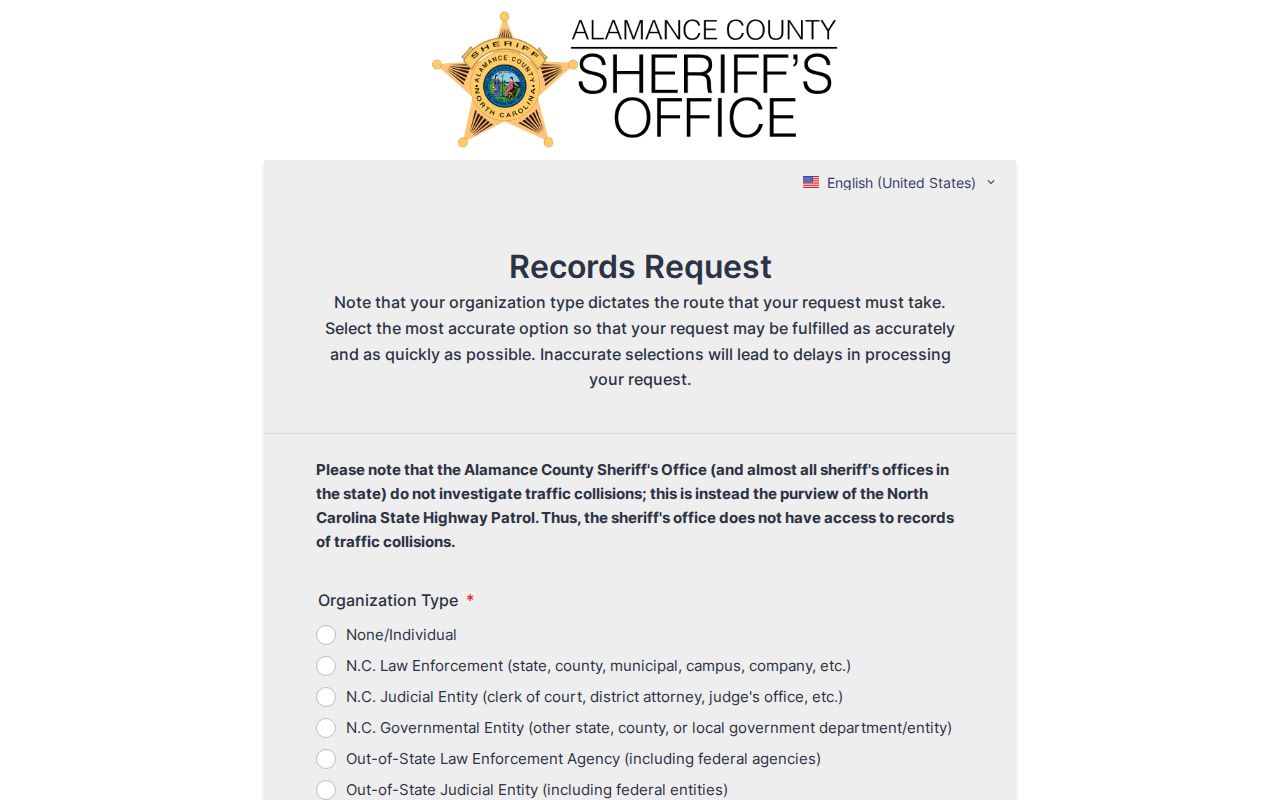
A written request does not turn a custodian into a private investigator. It is a route to existing public material that the office is permitted to release.